Wind Rider
Bob Lemmons
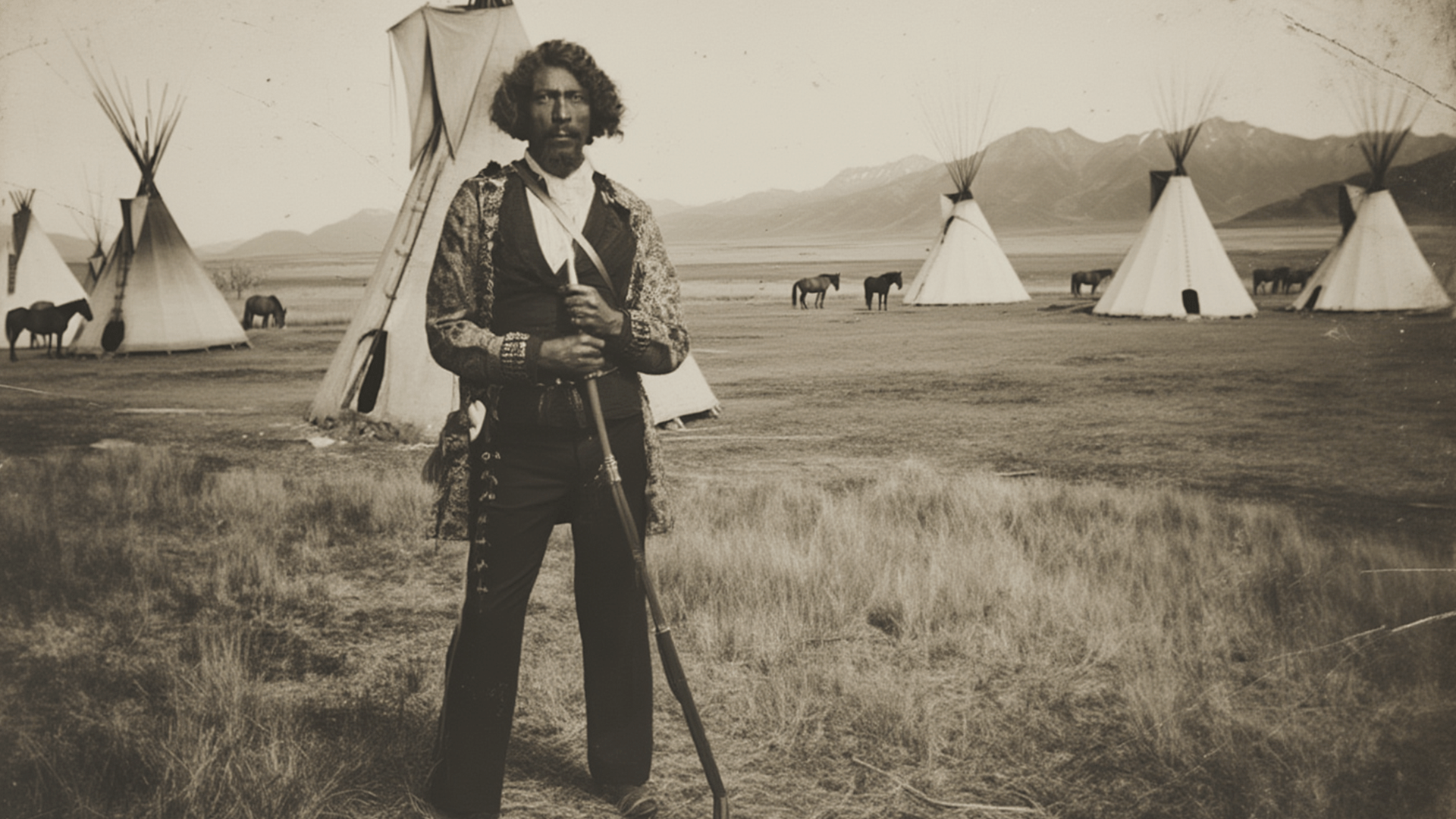
He was born into shadows, enslaved along the scrub plains east of San Antonio in 1848, a child of salt air and hoofbeat dreams. Freedom was still a rumor when Robert “Bob” Lemmon learned three languages: the rhythm-heavy cadences of the Gullah prayers his mother whispered over wash water, the clipped Comanche words his master used for horses and sky, and the wordless pulse of mustangs thundering across the Wild-Horse Desert. That last language was not taught; it lay dormant in his blood, a memory of Sahel and Senegambia carried west in chained holds. He would later say that horses were born knowing the same grief as his people, that the wind and the whip had trained them both to run.
When Union soldiers rode in 1865, blue coats flashing against mesquite, Bob was sixteen, thin, watchful, and full of a silence that made animals trust him. He left the fields without farewell, following the wind south into Dimmit County, where the land seemed to breathe in wide, hot sighs. He drifted among cattlemen, vaqueros, and Buffalo Soldiers, earning his keep as a horse breaker. He watched how each group spoke to their mounts: the Comanche by breath, the Mexican by song, the freedmen by patience. But the wild herds, unbranded, sovereign, called louder than any man’s wage.
He slept under open sky, learned the taste of alkali dust and the rattle of night insects that sounded like beads on a drum. Every dawn he watched mustangs shimmering in the heat distance, as if the ancestors themselves ran there, daring him to remember. He remembered.
❦
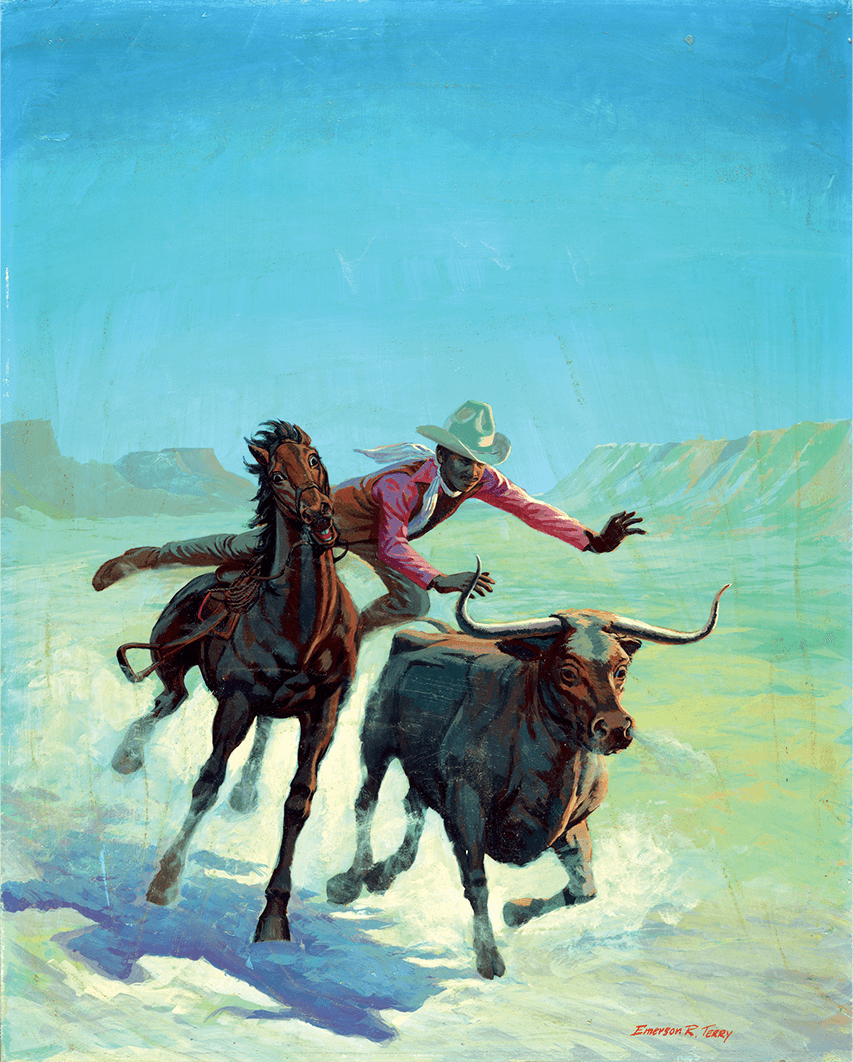
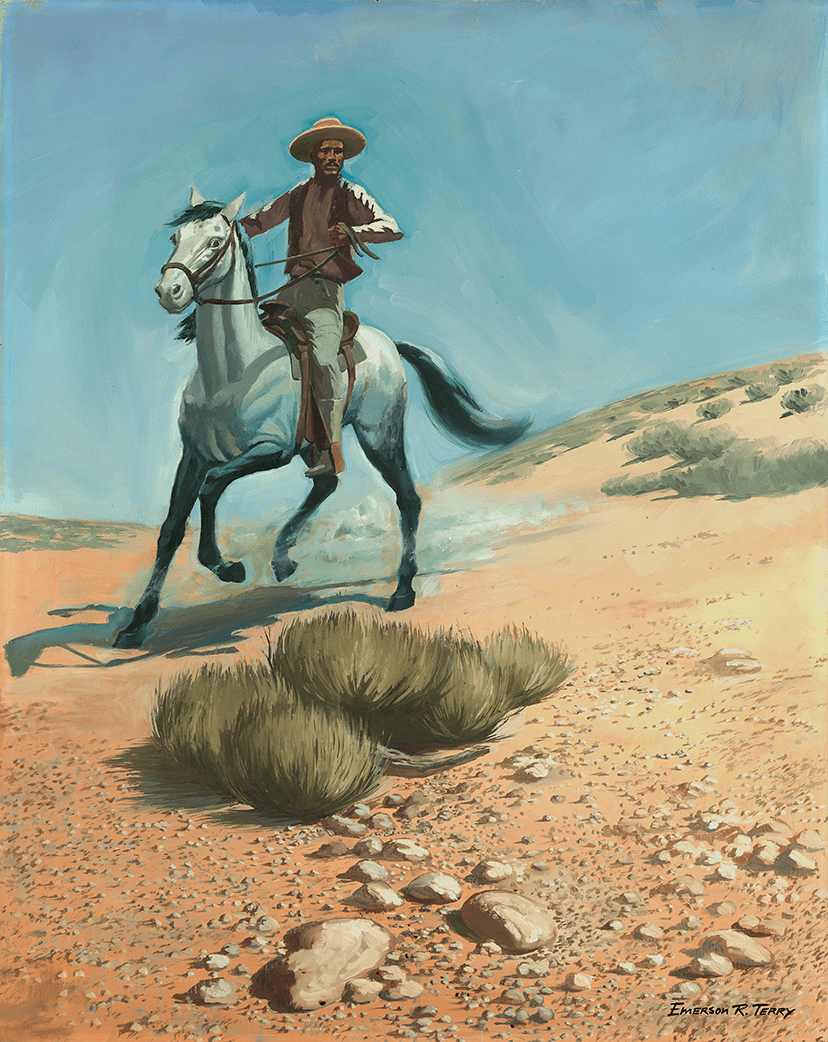
In 1873, heat shimmered above Espantosa Lake like spirits dancing on coals. Bob crouched beside Warrior, his blue-roan gelding, watching thirty mustangs graze in a sun-cracked arroyo. The lead stallion, coal-black with a gray-muzzled snout, raised its head and tested the air. Bob breathed with him, slow, deliberate, then slid from his saddle, stripping away everything that smelled of man. Barefoot, hatless, he entered their periphery. He did not look at them directly. He moved like the wind.
By midday, the sun was a hammer. Sweat ran down his back, pooling with dust until his skin looked carved from the same earth. The stallion snorted but did not flee. Bob mirrored its breath, crouched, stood, and turned his shoulder. He remembered something his mother once murmured about ancestors who trained desert horses back in “the land before chains.” She had never said where, only that they sang to their animals until horse and rider shared one soul. He sang now, low and tuneless, more hum than word. The herd drifted closer.
At dusk, he lay down among their hoofprints; by dawn, he was within their ring. When the stallion approached, Bob bowed his head and hummed a praise song he’d learned from a griot up the Nueces:
Sannu, sahel-horse, child of thunder, remember Timbuktu. The herd wheeled, nostrils flaring. He mounted the stallion bareback, whispering thanks. At sunrise, he drove them into a natural corral along the lake. The railroad agent who arrived two days later would pay forty dollars a head and call him
brujo negro, the black sorcerer of the plains. Bob only smiled. He knew it was not magic but memory.
The mustangs’ hooves had written his name in the dust, and Texas had begun to take notice. Rumor said he could ride any creature that breathed, that he could track a horse by scent alone, that even Comanche scouts tipped their hats when he passed. He ignored the talk; legends couldn’t mend tack or feed a belly. Still, he carried a quiet pride, not of fame but of return, proof that what his ancestors knew had not died in the Crossing.
❦
The agent was late, so Bob rode to Las Moras Springs, a speck of adobe and candlelight crouched beside the creek. Inside a cantina washed in smoke, he found Inez Olivares, daughter of a Kikapú healer and a Black Seminole scout who had ridden for the Union. Her eyes were storm-dark, her jaw marked by a pale scar, a gift from the Confederacy. She poured mescal into a chipped clay cup and studied him.
“Señor Lemmon, you smell of horse sweat and revolution.”
He lifted the drink, grin easy.
“Freedom’s cologne.”
Her laugh was low, edged with sadness and humor.
“Then you and I breathe the same perfume.”
They talked until the candles guttered, about the frontier, about the new laws that still chained people without iron. She spoke of her father’s dreams to build a healing house for soldiers and runaways; he spoke of the way a mustang’s eyes mirrored the stars. Their stories wove like smoke, vanishing into each other. But before the air could settle, the door slammed open. A telegraph rider, dust-caked and trembling, burst in.
“Captain Voorhies is coming,” he gasped.
“He’s drafting all mustangers, Black and Mexican alike, to round up horses for the railroad grant. Those who refuse, ” he sliced a hand across his throat.
The cantina went silent except for the hiss of a candle drowning in its own wax. Inez’s eyes hardened.
“I will not let that man cage the desert’s children.”
“Nor will I,” said Bob. “But rustlers with badges don’t fight fair. Will you ride with me?”
Her answer was the metallic whisper of a Colt .44 sliding home beneath her embroidered serape.
“Ask again after dawn,” she said.
“I’ll already be in the saddle.”
❦
They rode by moonlight to the brush country west of Carrizo Springs. Within days, they’d gathered a guerrilla band: two Black Seminole scouts from Fort Clark, a Lipan woman named Rosa Aguilar, and Father Dominique, a Haitian-born priest whose saddlebag held both a Bible and a Henry rifle. They camped where mesquite threw twisted shadows and coyotes sang counterpoint.
Bob spread a hand-drawn map on a flat rock.
“We scatter his herds here,” he said, tapping the line of the railroad spur.
“Break his supply wagons, draw him to the Sinkhole. The desert will fight with us.”
“Then let it roar,” Inez replied. She rolled her shoulder, wincing from an old wound.
“You do your part, Lemmon, and I’ll see that his men never find north again.”
That night, she told him about her mother’s people, the Kikapú, who had crossed the Rio Bravo years earlier to escape war, who believed every creature carried a song that could open the sky. “Maybe that’s what you do,” she said, eyes bright. “You sing the sky open.”
He shook his head.
“The sky opens itself. I just remember the rhythm.”
Their first strike fell beneath a bone-white moon. Rosa’s owl-call floated through the dark; rifles cracked; rails sparked under hooves. Voorhies’ corral erupted into chaos, mustangs streaming like ghosts through smoke. Bob rode low, whispering to the panicked herd, guiding them into the canyon. By dawn, nothing remained but hoofprints and a sawed-off lock swinging like a tongue.
Victory came at a price. A bullet grazed Inez’s shoulder. Bob tore his shirt, poured whiskey over the wound, and bound it tight.
“You should have stayed back,” he murmured.
She winced, smiled.
“And miss the dance? Never.”
He met her eyes, thinking of an old Kiswahili proverb:
Mapenzi ni dawa, love is medicine. He kissed her brow, whispering a promise in both their ancestral tongues to see her healed.
For three days, they hid among the mesquite hills, nursing wounds and nerves. At dusk, they shared jerky and water while the scouts sharpened knives on river stones.
“Do you ever tire of running?” she asked.
“I don’t run,” he said. “I ride the wind until it tires of me.”
She laughed softly.
“Then may the wind never rest.”
❦
Two days later, the chase caught up with them. The sun hung like molten copper; dust rose in red veils. Voorhies’ militia, ragged Confederates turned railroad men, closed from the north, rifles glinting. Warrior stumbled; Bob rolled free, fired upward, and dropped a rider. Inez vaulted onto the black mare Sabaa, the same mustang Bob had gentled weeks before. Her hair streamed like flame against the desert light as she wheeled to draw pursuit. Three militia horses broke formation to follow her, tearing the column apart.
They raced toward Devil’s Sinkhole, a limestone maw in the earth rimmed with brush and legend. Old stories said spirits lived there, that falling rocks were bones of giants. The plan was desperate: Bob would ride Sabaa into the cavern, leading Voorhies in; Inez and the others would set the entrance ablaze with nopal torches soaked in whale oil. If the wind turned wrong, they’d burn too.
Inside, the air chilled. Bob pressed his cheek to Sabaa’s mane. “Easy, child of thunder,” he whispered in Yoruba. The herd behind him fanned into the darkness, hooves whispering like drums. He felt their heat, their confusion, their wild faith in movement. The desert seemed to hold its breath.
Then came Voorhies, shouting curses, revolver flashing. Flames leapt from the entrance, walls of living fire. Shadows twisted like Egungun spirits. Voorhies’ horse reared; he tumbled, pistol skittering across stone. Bob dismounted, blade in hand.
“Still think you can steal the desert’s breath, Captain?”
Voorhies spat dust.
“You’re nothing but a slave pretending to be Comanche.”
Bob’s laugh cracked like a whip.
“I’m every ancestor you tried to erase.”
Inez appeared through the smoke, carbine steady.
“And I’m the future that doesn’t need your permission.” She fired upward; the bullet shattered a stalactite. Stone crashed down, pinning Voorhies beneath its weight. His horse bolted into the darkness. Silence flooded the cavern except for the ragged hiss of cooling fire.
Then came Voorhies, shouting curses, revolver flashing. Flames leapt from the entrance, walls of living fire. Shadows twisted like Egungun spirits. Voorhies’ horse reared; he tumbled, pistol skittering across stone. Bob dismounted, blade in hand.
“Still think you can steal the desert’s breath, Captain?”
Voorhies spat dust.
“You’re nothing but a slave pretending to be Comanche.”
Bob’s laugh cracked like a whip.
“I’m every ancestor you tried to erase.”
Inez appeared through the smoke, carbine steady.
“And I’m the future that doesn’t need your permission.” She fired upward; the bullet shattered a stalactite. Stone crashed down, pinning Voorhies beneath its weight. His horse bolted into the darkness. Silence flooded the cavern except for the ragged hiss of cooling fire.
Bob looked to Inez. Blood streaked her sleeve, but her eyes blazed.
“You still whole?” he asked.
“As the desert allows,” she said, wiping soot from her cheek. He reached to touch her hand; she let him, only for a moment, then turned toward the mouth of light.
“Come on, Wind Rider,” she said.
“The dawn won’t wait.”
They led Sabaa and Warrior toward the open air. Behind them, the Sinkhole sighed, swallowing smoke and empire alike.
The wind shifted, carrying the smell of mesquite and freedom. Neither spoke as they rode east, silhouettes merging with the horizon until the desert itself seemed to move with them.
❦
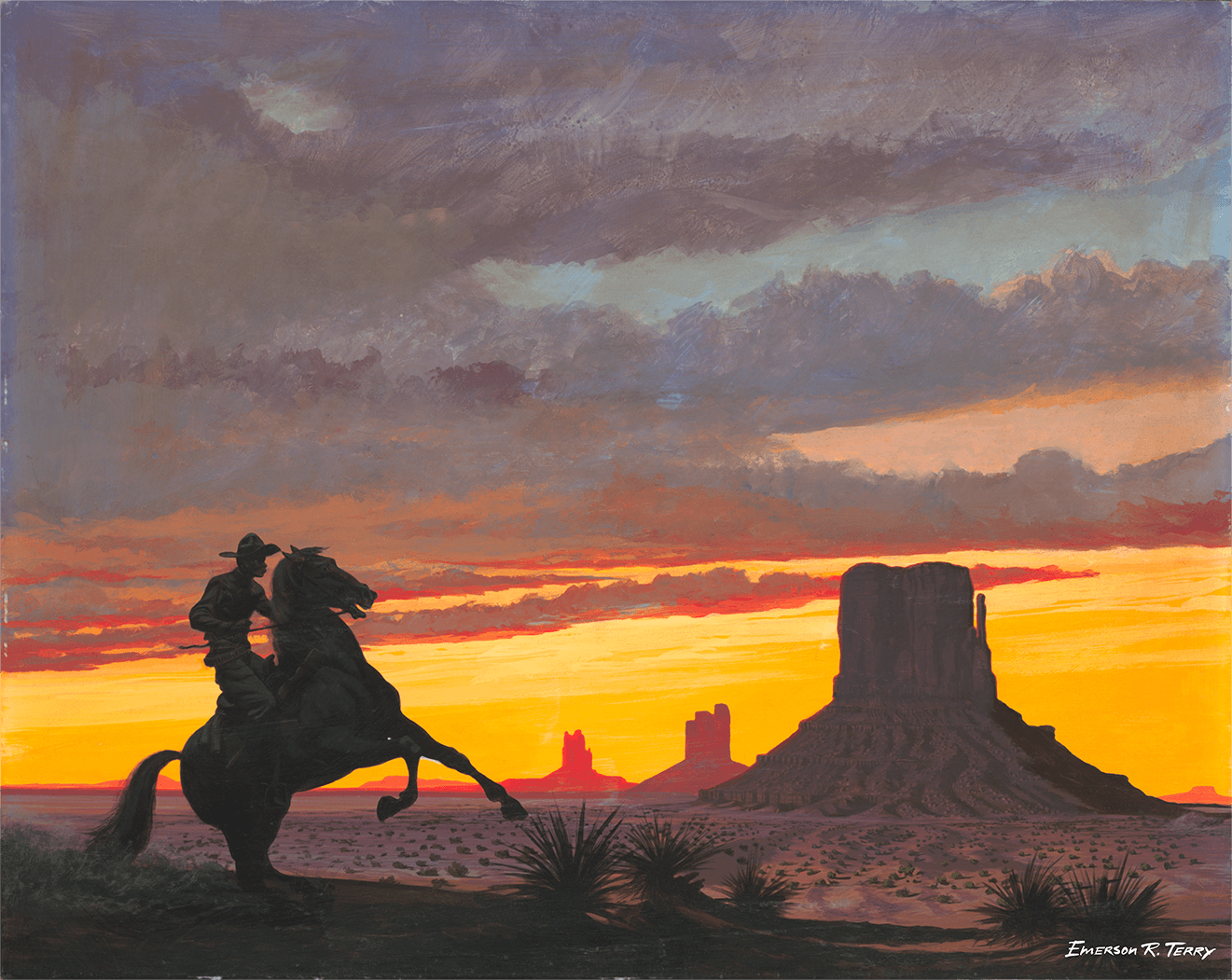
Long after dime-novelists scrubbed Black and Indigenous riders from the frontier’s memory, travelers crossing Dimmit County swore that at twilight they’d glimpse two silhouettes, one a woman in a scarlet serape, the other a man whose shadow fused with a black stallion, riding a ghost herd toward the sinking sun. They vanished whenever fences rose, returning only where land remained free. And on quiet Texas nights, when cicadas hum like shekeres and wind moves over limestone, whisper Bob Lemmon’s name; the air may answer with a low thunder, half hooves, half heartbeat, reminding that empires are temporary, but love and freedom gallop on.
End Notes
1. Bob Lemmons (1848–1947), documented as “the most original mustanger in Texas.” Handbook of Texas Online, Texas State Historical Association.
2. Born enslaved near Lockhart or San Antonio; freed after 1865; employed by Duncan Lammons. BlackPast.org, “Robert Lemmons (1848–1947).”
3. His method of joining wild herds by mimicry is described in J. Frank Dobie, The Mustangs (1952), and True West Magazine, “Herding with the Wind.”
4. Lemmons’ equestrian skill is rooted in West-African Sahel traditions. See Kevin Dawson, Undercurrents of Power (2018); William Piersen, Black Legacy (1988).
5. The Wild-Horse Desert (La Coma del Caballo Bravo) spanned Dimmit, La Salle, and Maverick Counties. TSHA, “Wild Horse Desert.”
6. African-descended Texans from the Gullah Coast carried linguistic and musical forms westward between the 1830s and 1840s. Lorenzo Dow Turner, Africanisms in the Gullah Dialect (1949); Andrew Torget, Seeds of Empire (2015).
7. Black Seminole scouts and Kikapú communities at Fort Clark and Las Moras Springs verified in Thomas Britton, The Black Seminoles (1999).
8. Character Inez Olivares represents composite Afro-Indigenous women of border settlements; see Gloria Anzaldúa, Borderlands/La Frontera (1987).
9. Devil’s Sinkhole near Rocksprings, Texas, is a historic natural feature linked to the folklore of ghost riders.
10. The legend motif aligns with oral traditions in Dimmit County that preserve Lemmons’ name as a symbol of freedom and motion beyond borders.
More Chapters

Choose your Trail