Marble
and Dust
Elijaha Cross
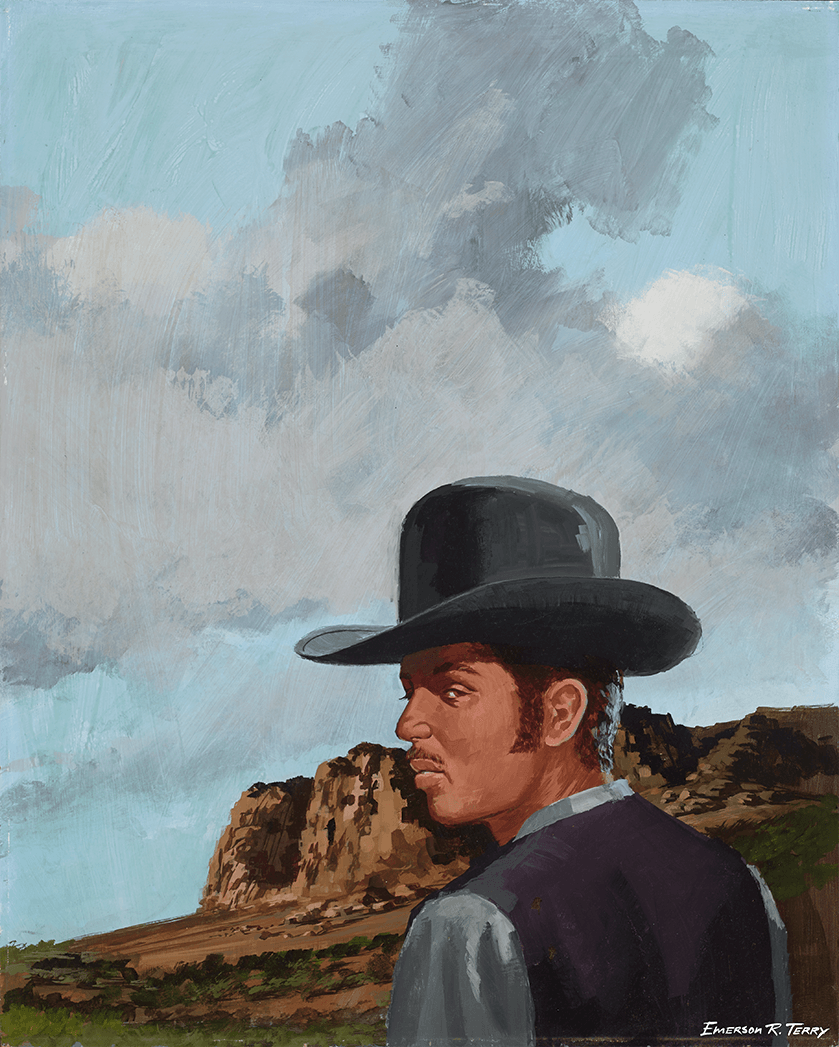
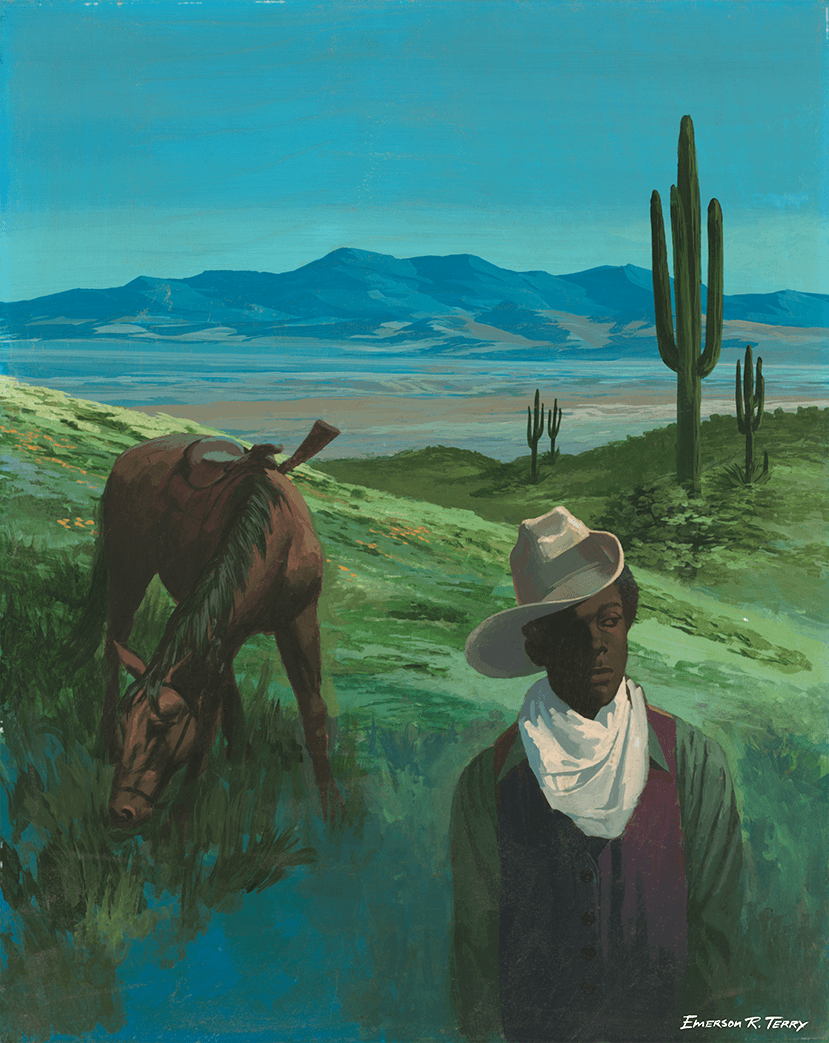
The fairgrounds looked like the whole country was trying to stand still. Steam hissed from engines. Flags shook in the summer air. Brass music slipped in and out of tune. Sergeant Elijaha Cross walked through the crowd with his hat low and his eyes steady. His blue coat was brushed, but Texas dust still clung to the seams.
He had been sent from the Ninth Cavalry to represent the regiment at the Centennial Exposition. The orders sounded grand on paper. In truth, he felt like one man sent to prove that his people existed. He moved past machines and pavilions until the noise dimmed.
Inside the U.S. Government Building, the air was cooled. The high glass roof caught light and threw it down in pale sheets. Voices dropped to a murmur. Ahead of him, people formed a half circle around something tall and white.
Elijaha stepped closer. In the center stood a marble figure on a carved couch. A queen lay in heavy robes. Her head tilted back. An asp rested at her throat. Even in stone, her body looked as if life had just left it. The placard at the base read: The Death of Cleopatra. Under that, in small letters, was the name of the sculptor.
“Edmonia Lewis,” Elijaha read quietly.
He took off his hat. The gesture felt natural, the same motion he used for a flag or a grave. A boy near him copied the move. The room seemed to lean toward the marble.
“You served,” a voice said at his side.
He turned. The woman who spoke was small in height but not in presence. Her skin was a warm brown. Fine white dust marked the cuffs of her dark dress. Her hair was pulled back. Her eyes were direct and steady.
“Yes, ma’am,” he said. “Ninth Cavalry. Out of Texas.”
She nodded once. “I thought so. The way you stand. I am Edmonia Lewis.”
He looked again at the placard and then at her. “Then this is yours.”
“It is,” she said. “Years of work. Then a ship. Then, arguments with officials who did not wish a colored woman’s sculpture in their fine hall.”
“But it is here,” Elijaha said.
“It is here,” she agreed. “Sometimes that is the victory.”
They stood together facing the queen. Outside, a brass band stumbled through “Hail Columbia”. The tune slid, then caught itself. A young Black woman in a neat dress stood nearby with three students from Howard University. She whispered to them about Rome, marble, and the courage it took to leave America in order to work freely.
A young private from Elijaha’s regiment had followed him into the building. Henry Tillman’s eyes were wide, his jaw tight with the effort to behave in a grand place. He stared at the marble queen, then at Edmonia.
“Sergeant,” Henry whispered, “she carved that?”
“Yes,” Elijaha said.
Henry looked at Edmonia. “Ma’am, I never saw anything like it.”
She smiled, not wide but real. “Then keep looking. Let your eyes learn.”
Elijaha studied the queen’s face. “She looks tired,” he said, “but not beaten.”
“That is what I wanted,” Edmonia said. “A woman choosing her own end. Not a victim. Not a decoration. A mind, even in death.”
Elijaha nodded slowly. “On campaign, we see men die with no choice. It is a hard thing. This feels different.”
“It is different,” she said. “I chose this subject. I chose this pose. I choose what the stone will carry. That is the power I claim.”
People moved and whispered around them. A white man frowned at the placard, then walked away. A Black couple lingered. The queen did not move. The room bent around her.
“Sergeant,” Edmonia said, “do you think your officers will remember that you stood here?”
He thought for a moment. “The officers will remember the report,” he said. “The army may remember the regiment. Most days, that is all. But the men will remember. I will tell them this is here. I will tell them your name.”
“Then we trade,” she said. “You carry my name back to the frontier. I carry the sight of your uniform back to Rome.”
Henry cleared his throat. “Ma’am,” he said, “do you think there will ever be statues for men like us?”
Edmonia looked at him. “I do not wait for permission to honor us,” she said. “This queen stands for more than Egypt. She stands for every Black woman and man who refused to bow. You are in this stone already, whether they say so or not.”
Henry straightened. “Yes, ma’am.”
Elijaha placed his hat back on his head. “Thank you,” he said to Edmonia.
“Thank you,” she answered. “For riding when the country is not yet ready to see you.”
He gave a short nod and turned to go. Henry followed. As they stepped back into the heat, the smell of coal smoke and roasted peanuts rushed around them. Fireworks would later rise over the grounds. For now, the sun did the burning.
“Sergeant,” Henry said, “I will not forget that statue.”
“You had better not,” Elijaha said. “I plan to ask you about it every month.”
❦
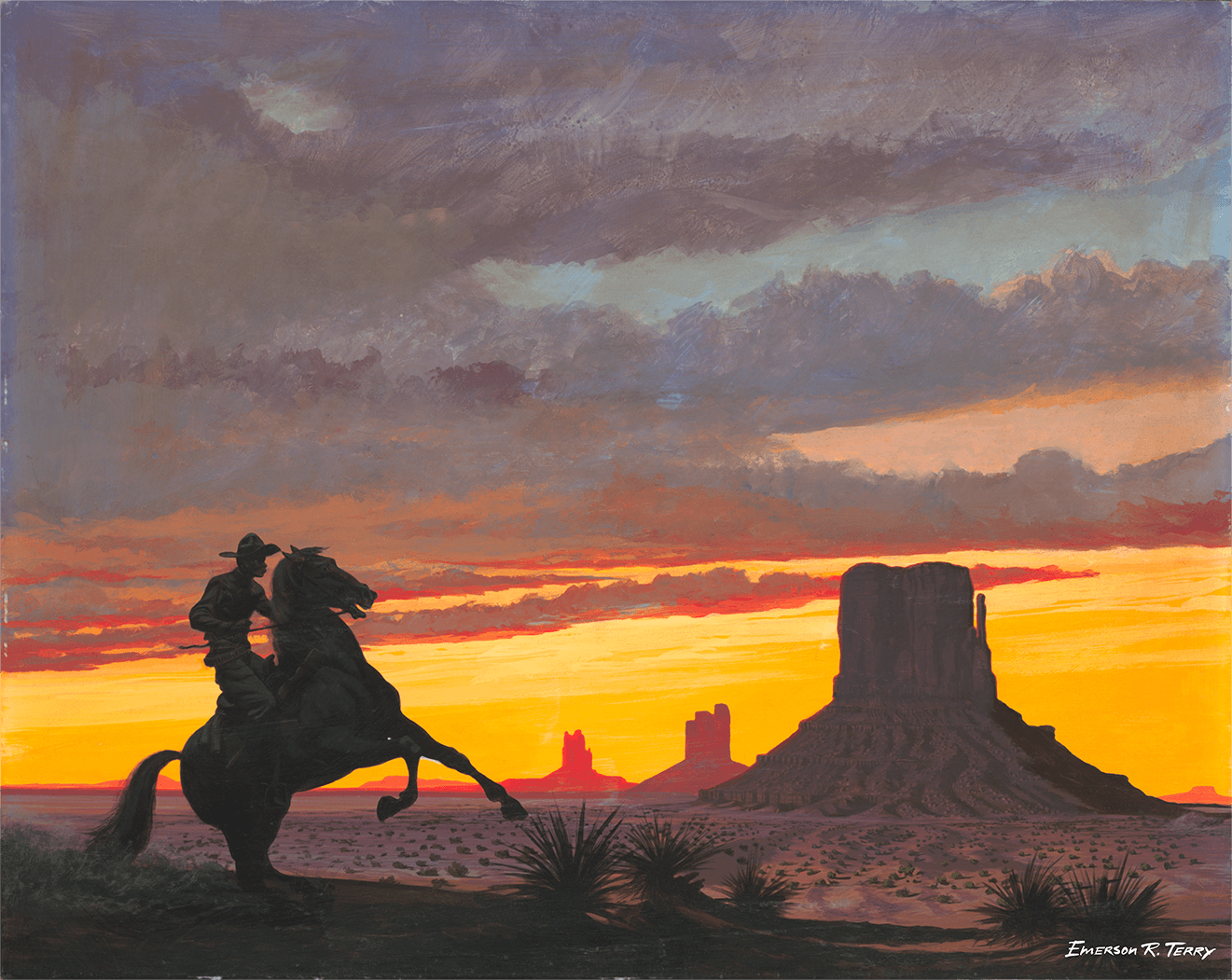
Fort Davis sat in a bowl of brown hills and hard light. Limpia Creek cut across the ground like a thin silver line. The stone walls of the fort held the wind enough for drill and rest. The Ninth Cavalry had reoccupied the post and made it a living place again.
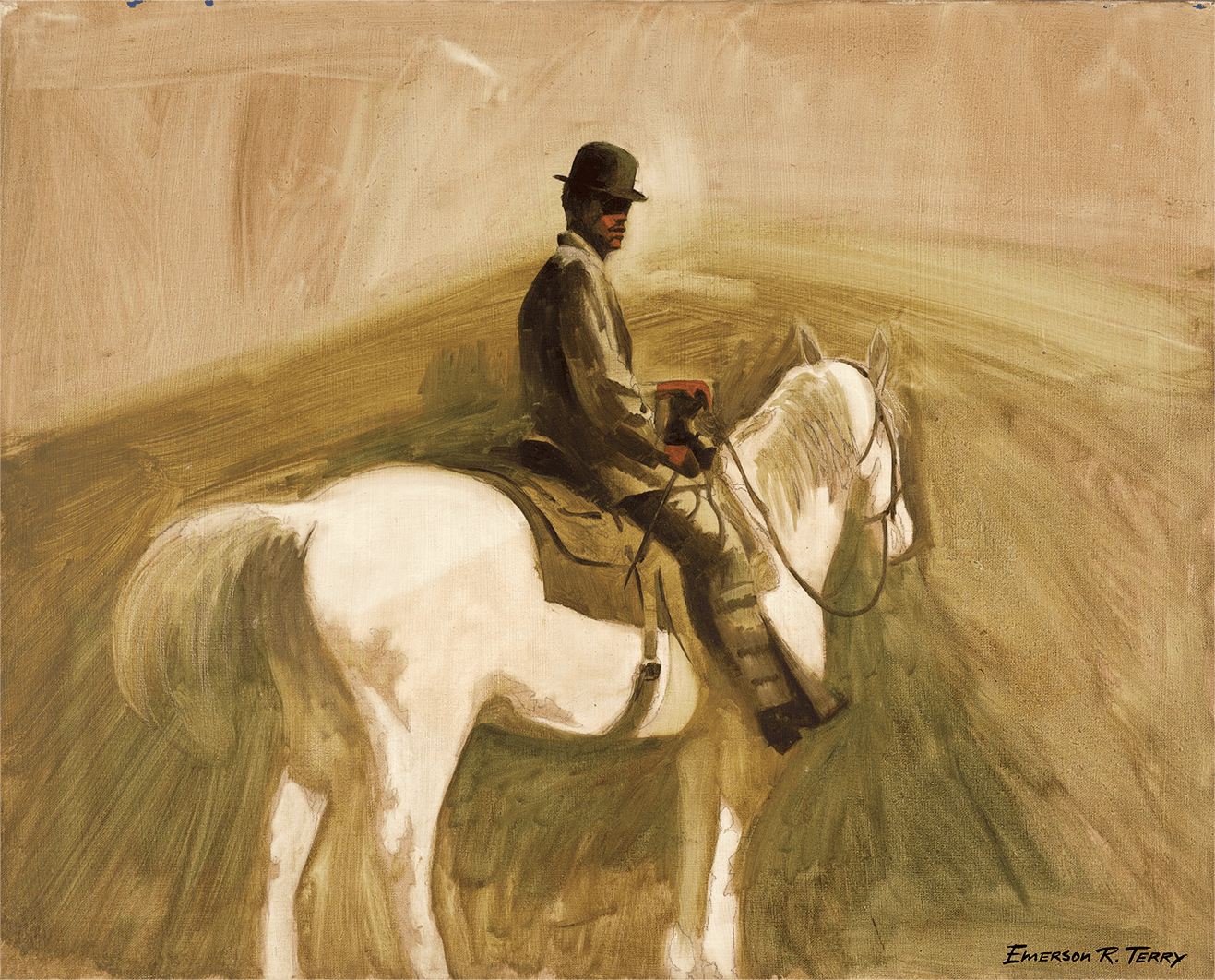
Elijaha walked the line of mounted men. “Hands loose,” he said. “Seat deep. Trust your horses.”
Henry sat on a bay gelding whose ears flicked at every sound. He breathed slowly and tried to calm down his legs. The horse settled. Elijaha nodded once and moved on.
They drilled dismounts, skirmish lines, and carbine fire. Dust rose under hooves. Commands snapped. The sun climbed and slipped behind the mountains. At the mess, the men ate beans and bread. They joked and grumbled about everything except the orders they could not change.
Later, under a sky filled with stars, Henry and Elijaha sat near the cookhouse with tin cups in hand.
“I think of that queen,” Henry said. “She lies still, but it feels like she is watching.”
“She is,” Elijaha said. “That is what good work does. It keeps watching after you leave.”
“I never knew a colored woman could do that,” Henry said.
“Now you do,” Elijaha said. “And now you owe something. When you ride patrol, ride as if she will see how you used your day.”
Henry laughed once. “That is heavy-duty for a statue, Sergeant.”
“She can bear it,” Elijaha said. “Stone is strong.”
From the barracks, someone began a song about long trails. Other voices joined in. The tune floated out into the dark.
Over the next years, Fort Davis kept its rhythm. Patrols went out along the roads and toward the Pecos. The men escorted stages, chased raiders, and built new structures. They endured bad water, sudden storms, and long stretches of waiting. They buried comrades. Their work rarely reached the newspapers.
On a patrol in late summer, a storm walked the ridge without rain. Lightning flashed. Thunder rolled. The troop pressed on along the rocky trail.
Henry’s horse shied at a sudden crack. The reins slipped. The animal lunged sideways. For a moment, Henry hung between saddle and ground. Elijaha reached out, caught the trailing strap, and steadied both rider and horse.
“Hold,” he said. “Talk to him. He is scared, not mean.”
Henry stroked the horse’s neck. “Easy,” he said. “We both want to go home.”
The storm rolled away. The troop moved on.
That night, by a low fire, Henry stared into the coals. “Sometimes I feel like that horse,” he said. “Spooked by things I cannot control.”
“We all do,” Elijaha said. “The question is who catches the reins and how you listen.”
Henry nodded. “I think of the queen again. She did not flinch.”
“She had done her flinching long before,” Elijaha said. “What you saw was the end of a long fight.”
“You believe that?” Henry asked.
“I do,” Elijaha said. “Women like Edmonia do not reach Rome and the Centennial without surviving much. The stone carries more than we can see.”
They fell quiet. Crickets filled the space. The fire burned down.
Some months later, on a rest day, Elijaha spread his few papers on his bunk. Among them was a thin handbill from the Centennial Exposition. It showed a sketch of the Government Building and a list of notable exhibits. He had underlined the words “The Death of Cleopatra”.
Henry stepped into the barracks. “Sergeant, are you writing home?”
“Not today,” Elijaha said. “I am reading what we already lived.”
Henry picked up the handbill and studied it. “You kept this all this time?”
“Yes,” Elijaha said. “Men here need to know that a Black woman stood in that hall with her work and made people look up.”
Henry folded the paper carefully and set it down. “Do you think she remembers us?” he asked.
Elijaha thought of Edmonia’s clear gaze. “I believe she remembers something,” he said. “Maybe not our names. But she will remember our coats and our stance. That is enough.”
Later that year, in a town not far from the fort, violence came without warning. A white civilian, drunk and careless, fired his pistol into the air to impress his friends. The bullet traveled through plaster and into flesh. Elijaha felt a hot punch under his collarbone. He staggered and sat down hard.
Henry ran to him. “Sergeant,” he said, pressing both hands over the wound. “Stay with me.”
Elijaha’s breath grew shallow. “Hold,” he whispered. “You and the others. Hold.”
He looked past Henry to a point only he could see. His hand relaxed. His shoulders eased. His eyes closed.
The regiment buried Elijaha on a low rise near the fort. They fired three volleys. The chaplain spoke of duty and faith. Afterward, Henry sat alone and unfolded the Centennial handbill. He traced the letters of Edmonia’s name with one finger.
“I will remember,” he said quietly. “For both of us.”
❦
In Rome, the light in Edmonia’s studio came from the north. It was steady and cool. Marble blocks waited in the yard below. She chose them with care. Each new work began with listening. Her fingertips read the stone before her tools did.
She had sent Cleopatra to Philadelphia. She had watched strangers read her intentions in that white surface. She had watched Black faces change as they recognized themselves in a queen from long ago. She had spoken to soldiers who stood straight with quiet pride. The memory traveled with her back across the ocean.
Letters followed her. Some came from Boston patrons. Some from abolitionist friends. Some from people she had never met, who had seen her name in a paper and wanted a piece of her courage for their own.
One envelope was addressed in a strong, uneven hand. Inside, on lined paper, was Henry Tillman’s script.
“Dear Miss Lewis,” it began. “I am a private in the Ninth Cavalry. I saw your work at the Centennial beside Sergeant Elijaha Cross, who is now deceased. He died not in battle but from a foolish shot in town. Before that day, he often spoke of your queen. He told us that your stone proved we were worth carving. I write to thank you and to tell you that he remembered your name until the end. Respectfully, Private Henry Tillman.”
Edmonia read the letter twice. Then a third time. She pictured the tall sergeant from the Government Building. She imagined him falling in a place that held no banner and no glory. Her jaw tightened.
She sat at her table and took up her pen.
“Private Tillman,” she wrote. “Your letter reached me in Rome. I am sorrowed to hear of Sergeant Cross. I remember his stance and his respectful gaze. Men like him walk beside my figures, though others cannot see them. Stone can prove worth. So can service. You and your regiment honor the same struggle I try to carve. I cannot promise statues for each of you. I can promise that I will keep your presence in mind when I cut. Hold your line. Remember that you are already in the work. With respect, Edmonia Lewis.”
She sealed the envelope and sent it across the sea.
Then she went to the yard and chose a new block. Her assistants helped carry it inside. She chalked a rough outline on its face, then set the chalk down and rested both palms on the cold surface.
“You will carry more than a story,” she said softly. “You will carry the weight of men in blue on hot plains and their quiet dead.”
She picked up the point chisel. The first blow rang through the studio. Chips flew. Dust settled on her sleeves.
Outside, Rome moved with its usual noise. Inside, Edmonia worked at her own pace.
When she paused to clean a tool, she thought of Henry reading her letter at Fort Davis. She pictured him under a high sky, folding the paper and placing it in his breast pocket. She hoped the ink held.
Years later, visitors would look at her sculptures and argue about style, race, and history. They would write essays and give lectures. They would not know about the private who wrote from Texas. They would not know about the sergeant who had asked if officers would remember him. But their lives, and the choices they made, were in the grain of the marble all the same.
On a quiet evening, as the sun slid behind Roman roofs, Edmonia washed stone dust from her hands. She lit a small candle and set it near a sketch of Cleopatra. The flame shook, then steadied.
“We stand anyway,” she said into the stillness.
In Texas, on a low hill by Fort Davis, the wind moved over Elijaha’s grave. In the barracks, Henry unfolded a worn handbill and a treasured letter. He read until the words were fixed again in his mind. Then he put them away, stepped outside, and joined the men assembling for evening roll call.
“Company,” the lieutenant called. “Attention.”
Boot heels hit the earth as one. The line straightened. Somewhere, in memory and stone, a queen watched and approved.
End Notes
1. Smithsonian American Art Museum, documentation of Edmonia Lewis’s marble sculpture The Death of Cleopatra and its exhibition at the 1876 Philadelphia Centennial Exposition. (ACSforum, Smithsonian American Art Museum Cities And Memory)
2. Kirsten Pai Buick, Child of the Fire: Mary Edmonia Lewis and the Problem of Art History’s Black and Indian Subject (Duke University Press, 2010), for biographical context and Afrocentric readings of Lewis’s work. (Barnes & Noble Duke, University Press Academia)
3. National Park Service and related studies on Fort Davis and the Buffalo Soldiers of the Ninth U.S. Cavalry, including their garrison at Fort Davis and frontier duties in West Texas. (Parks & Travel Magazine National Park Service)
4. Overviews of the 9th Cavalry Regiment and Buffalo Soldiers during the Indian Wars, for timelines and operational context. (SWA Buffalo Soldiers Wikipedia Texas State Historical Association)
More Chapters

Choose your Trail