The Bulldogger’s
Testament
Bill Pickett
The phone rang late in the evening, its rotary dial still warm from use. Emerson Terry cradled the receiver, the pads of his fingers rough from the dried acrylic paint of a long day at the easel.
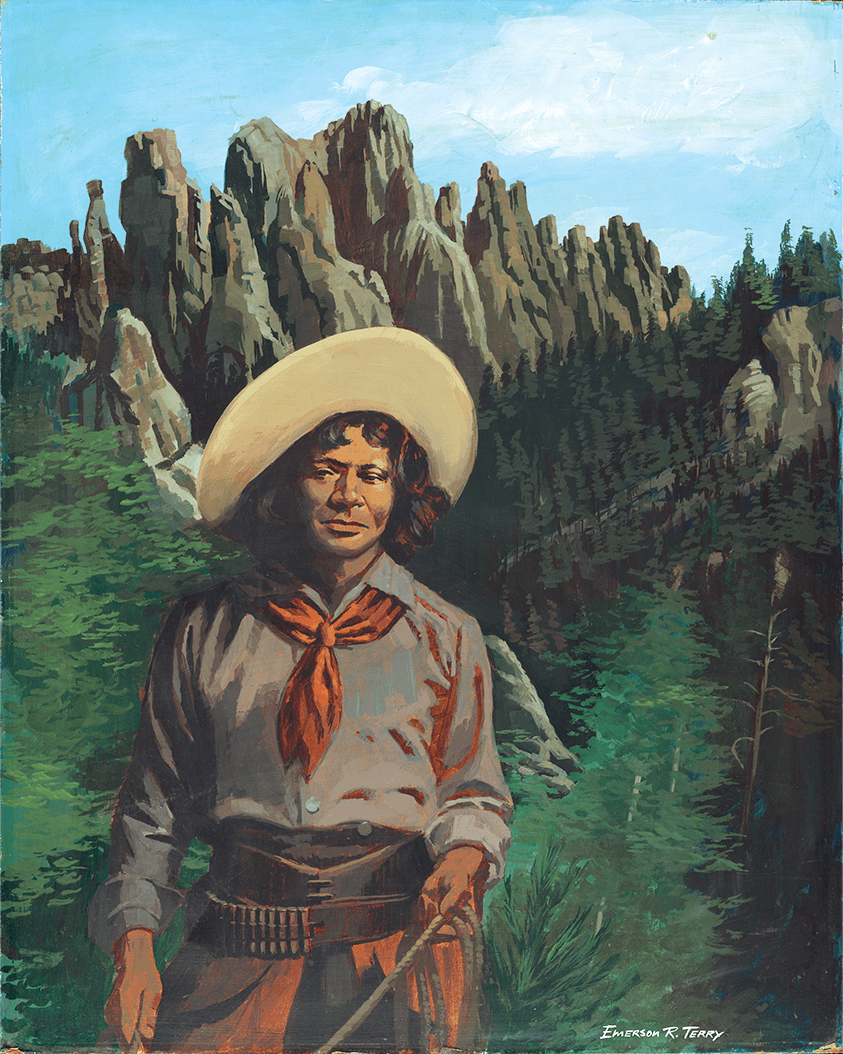
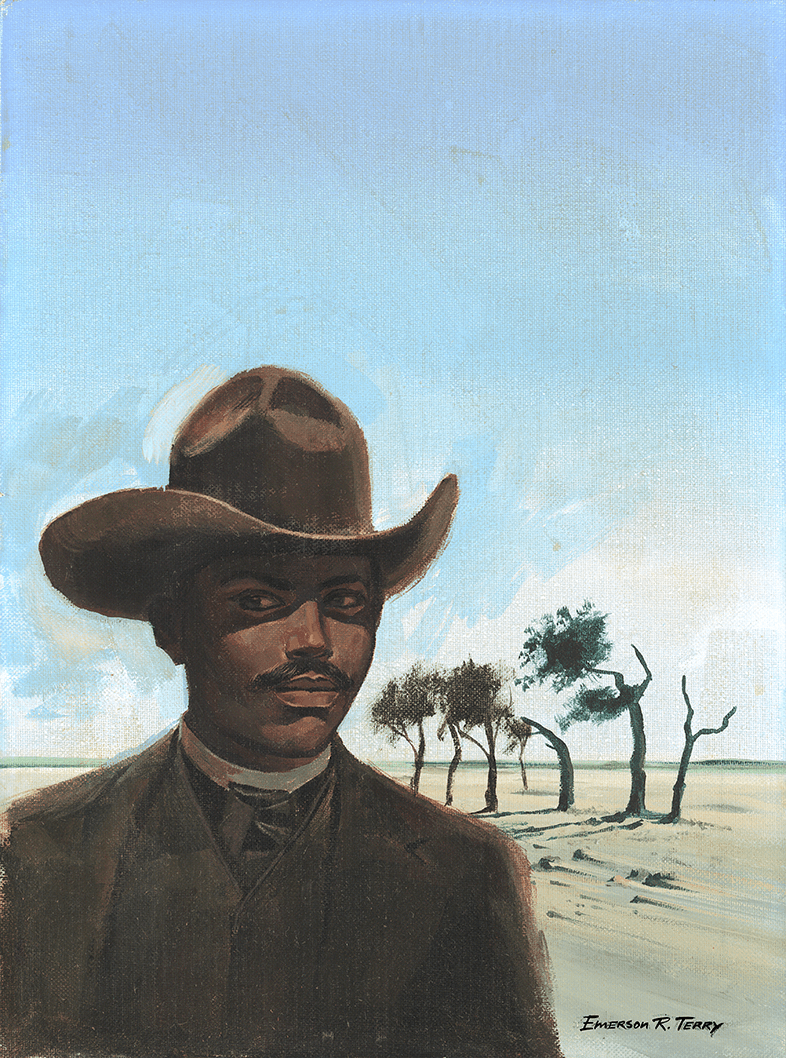
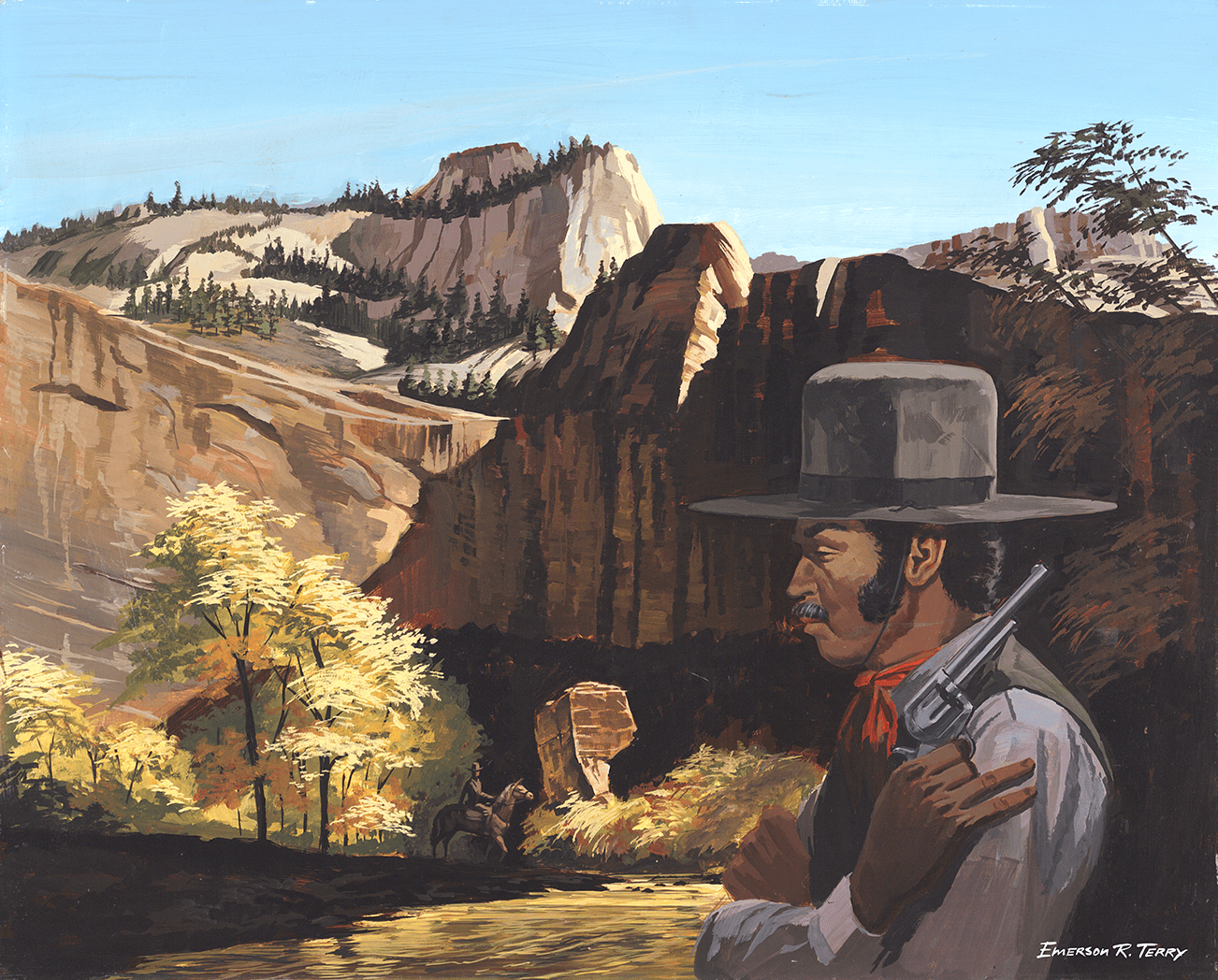
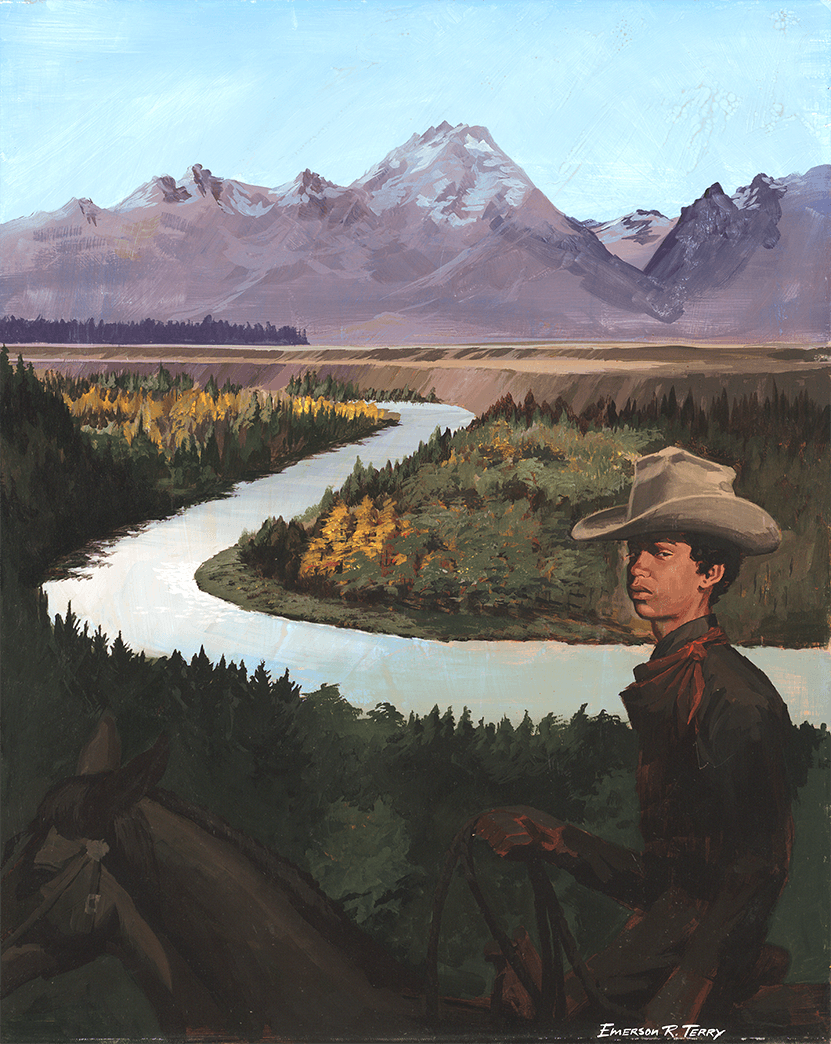
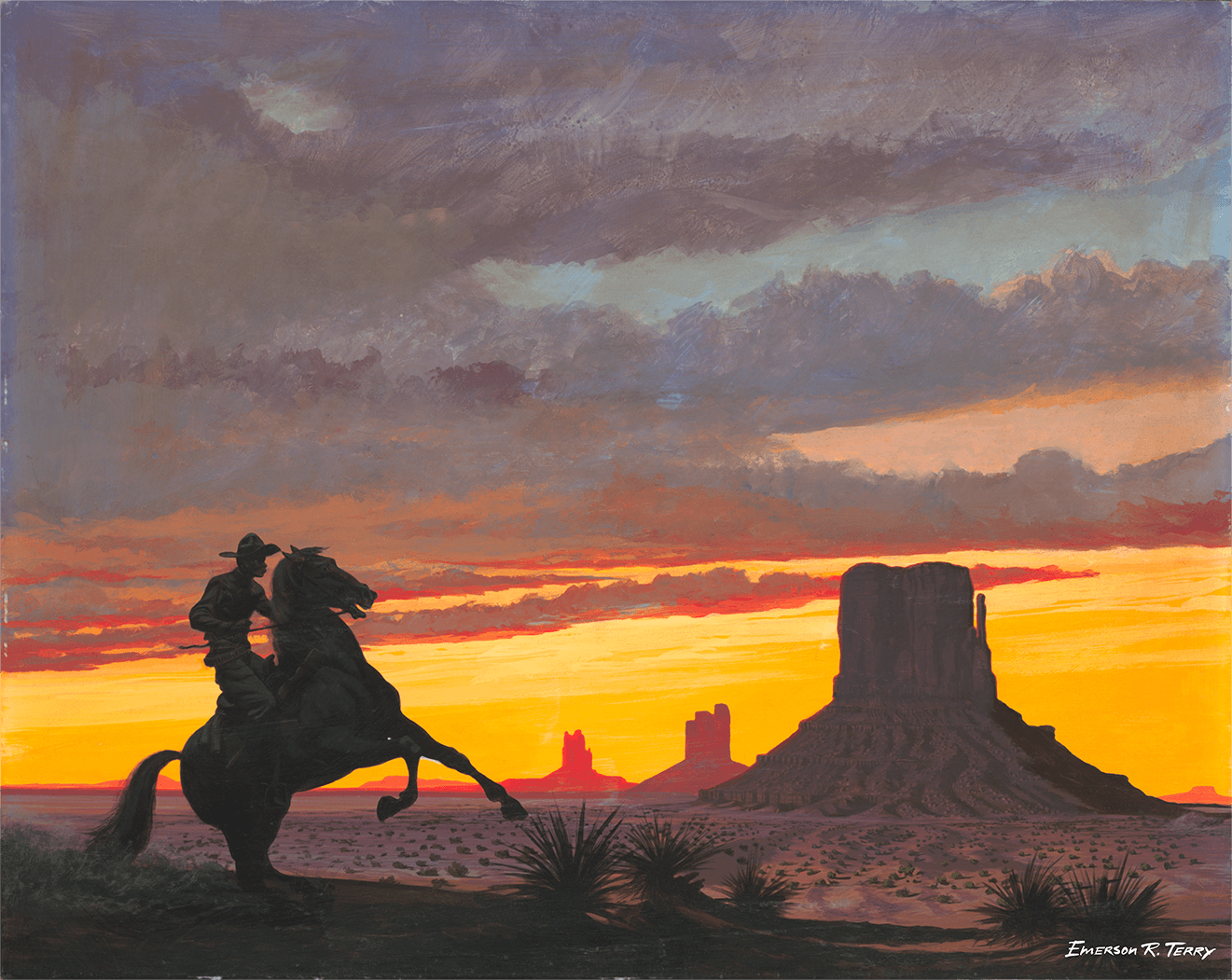
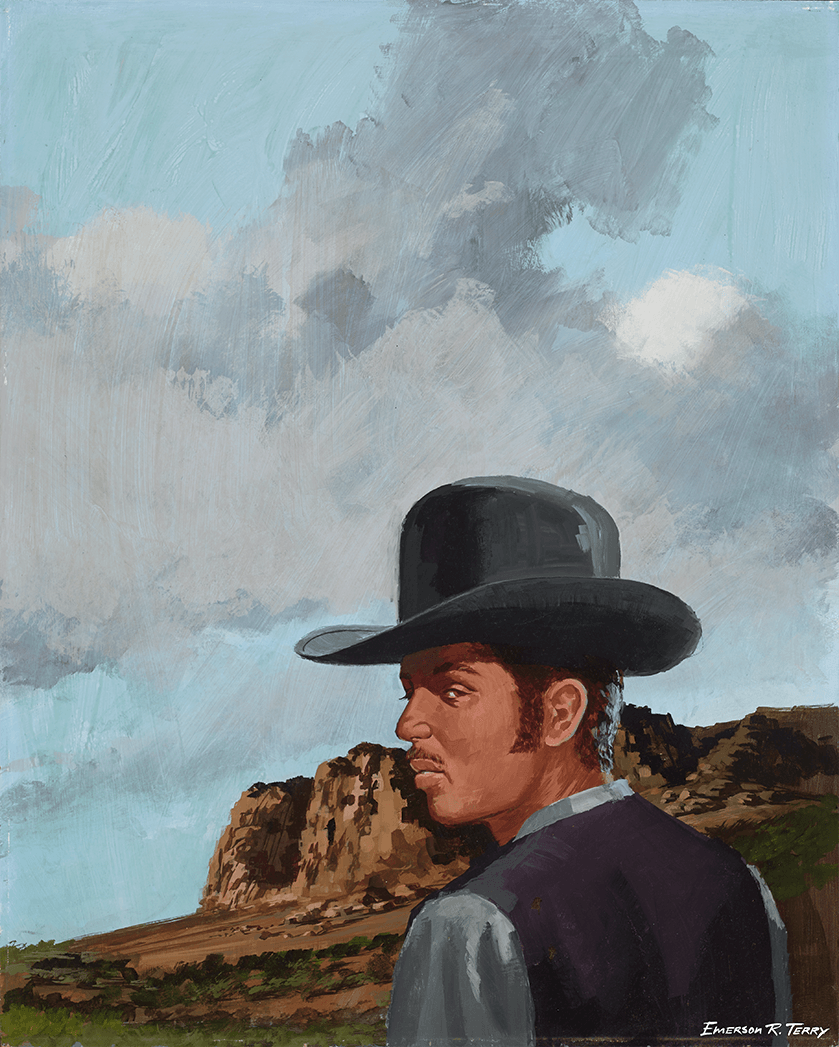
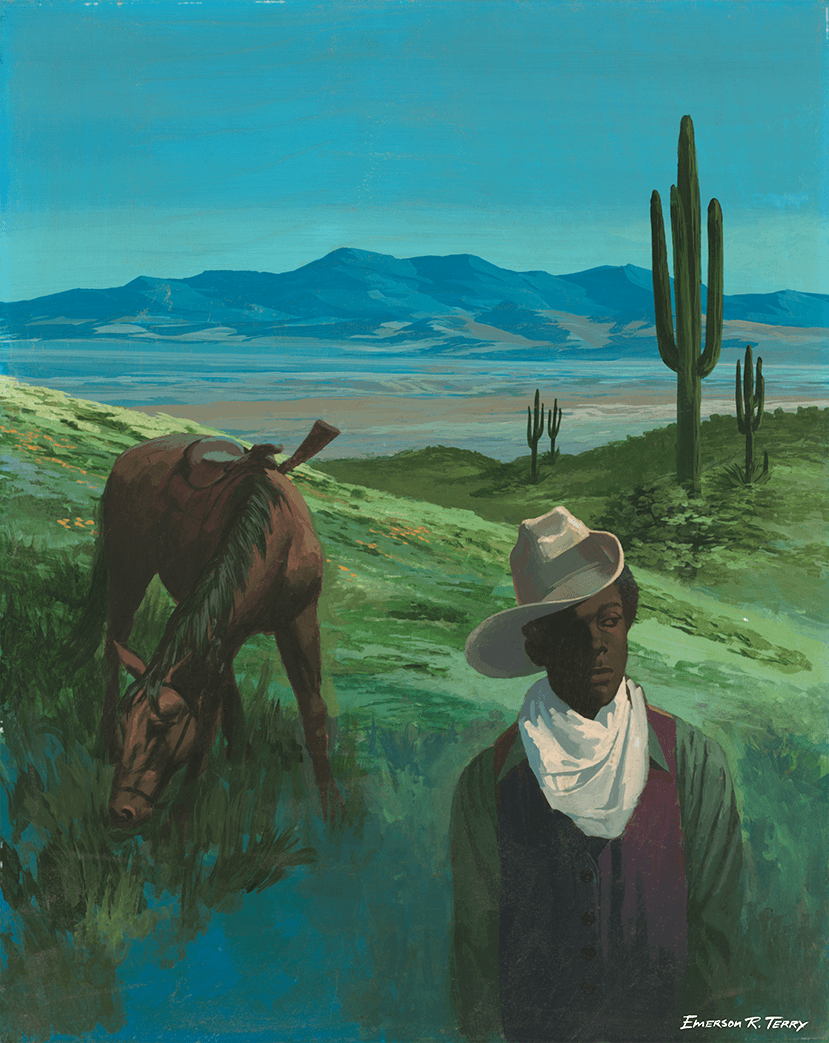
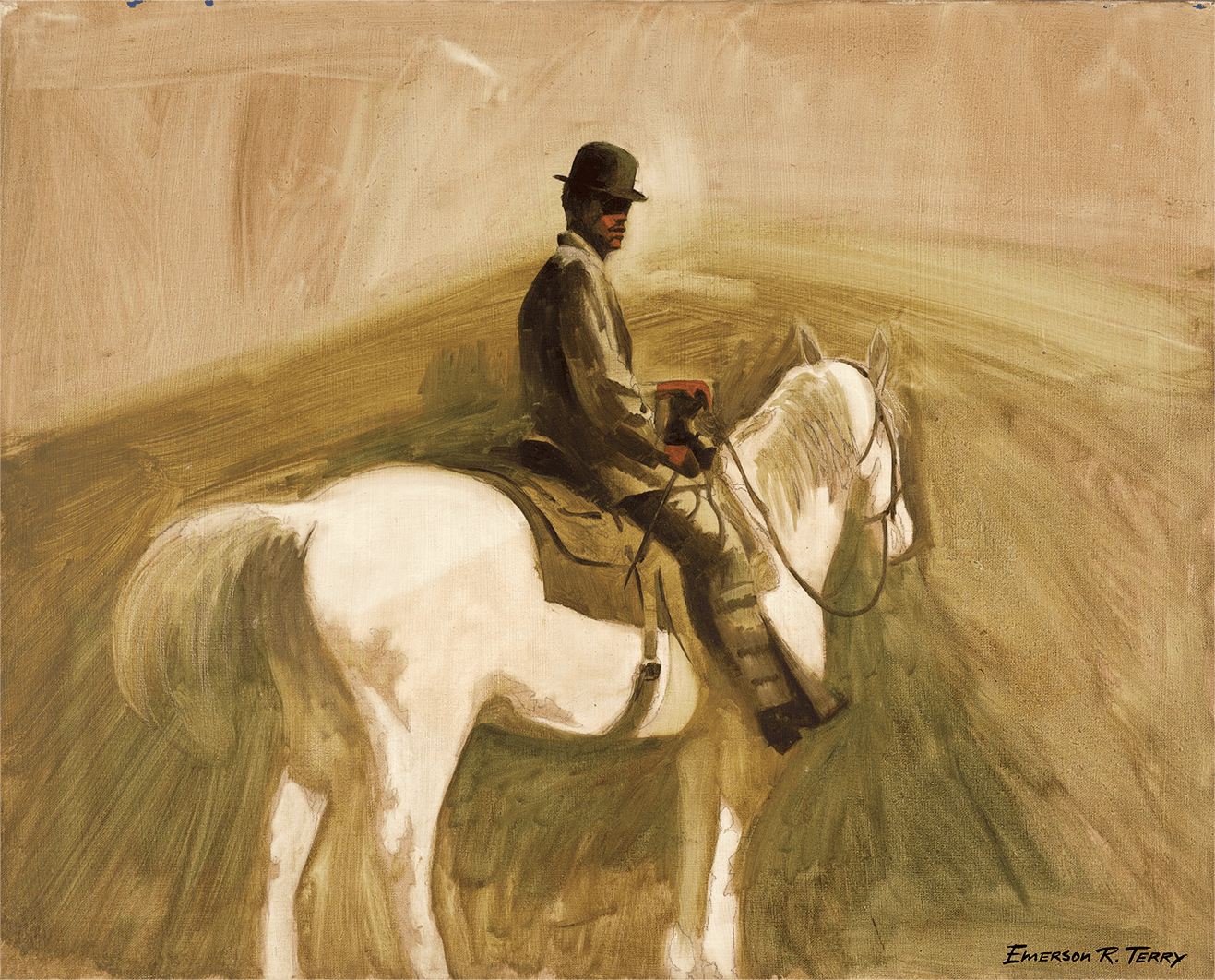
It was 1976, the Bicentennial year, and his Western portraits of forgotten Black cowboys hung high in the Los Angeles Museum of Science and Industry for Black History Month. Crowds had drifted beneath the canvases all day, whispering about the men they had never been taught to remember. Reporters asked the same question:
Were there really Black cowboys?
Emerson had smiled for the cameras, answering softly, “One in every three who rode the range was Black, Mexican, or Indigenous.”
Now the museum was dark, his celebrated portrait of Bill Pickett hanging downtown under a single spotlight. In his quiet studio, he sat before a new canvas, layers of deep umber and ultramarine suggesting the rising shape of another history.
“Mr. Terry?” The voice on the other end of the line was gravelly with age.
“Yes, this is he.”
“I saw your paintings in the paper. Saw those faces you brought back to life. I knew some of them stories already.”
A pause followed, heavy with memory.
“See, I grew up on a ranch where Bill Pickett lived when he was an older man. I saw him bulldog a steer with my own eyes. Nobody who saw him ever forgot it.”
The line crackled, the distance humming like wind across open land. Emerson rested the brush against the rim of his water jar.
“Then you’ll understand,” he said quietly, “why I painted him. Why I painted all of them. Their stories matter.”
The man chuckled. “They sure do. Let me tell you what I remember. Maybe it’ll help you see the dust and thunder of it all.”
❦
The Oklahoma sun hit hard that morning, thick with dust and the scent of horses. The 101 Ranch spread wide across the prairie, tents, fences, and show wagons gleaming with paint. Cowboys leaned on railings, tapping their boots in rhythm, while townsfolk swelled the stands. The announcer’s voice rolled through the air like a drumbeat:
“Ladies and gentlemen, prepare for the daring feats of the great Wild West Show! Straight from Texas, the master of the steer, the man who bites the bull and throws him down, Bill Pickett!”
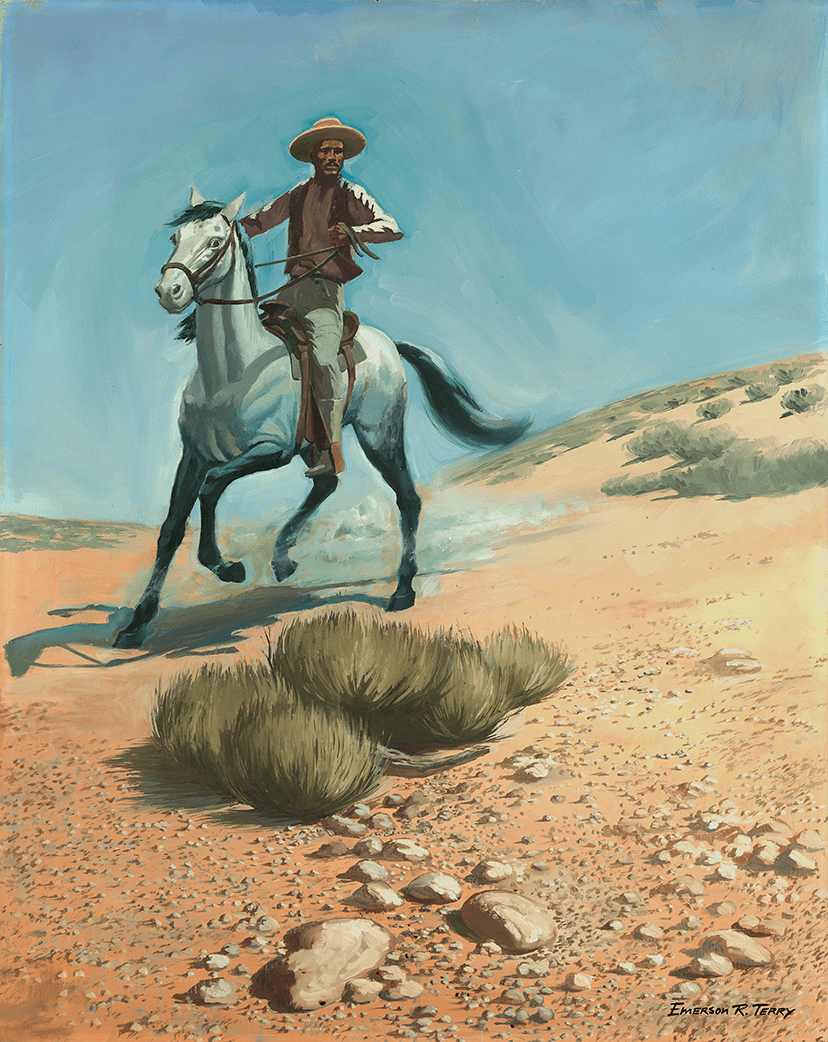
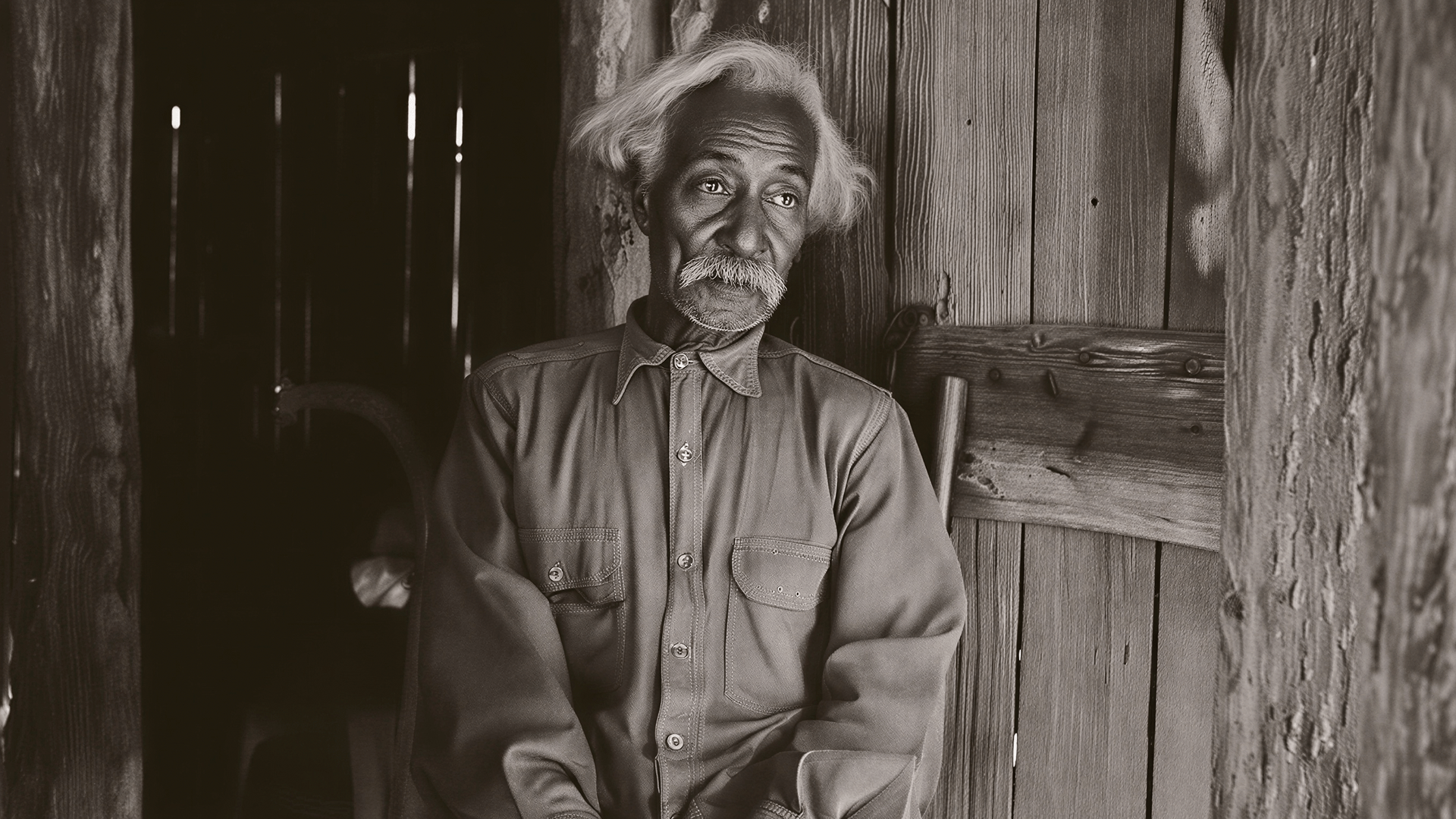
In the shadows near the chute, Pickett checked his gear. His dark, wiry frame moved with calm precision, hands calloused from years of breaking broncs and handling rope. His horse, Spradley, nickered softly as Bill rubbed his muzzle.
Bill had learned early that rodeo was part skill, part theatre. He could ride anything with hooves, but to survive the spotlight of a white-owned arena, he also had to play a role. The Miller Brothers, who owned the 101 Ranch, called him “The Dusky Demon.” Sometimes “Mexican.” Sometimes “Comanche.” Never simply
a Black man who invented bulldogging, the very act that thrilled their audiences.
He adjusted his saddle, muttering, “Let ’em call me what they want. Long as the steer goes down clean.”
“Bill,” came a voice behind him. “Crowd’s hungry tonight. Make ’em chew their teeth.”
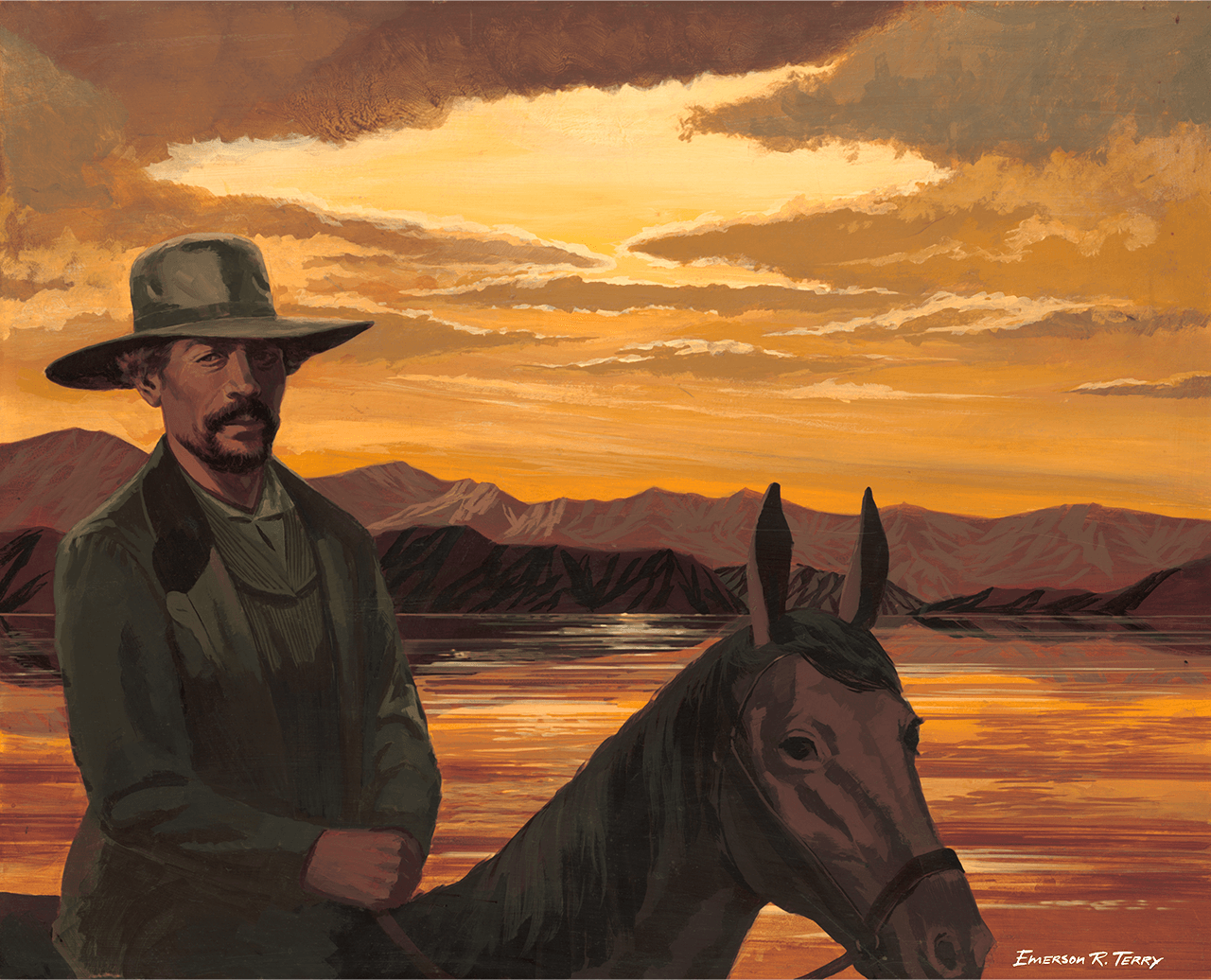
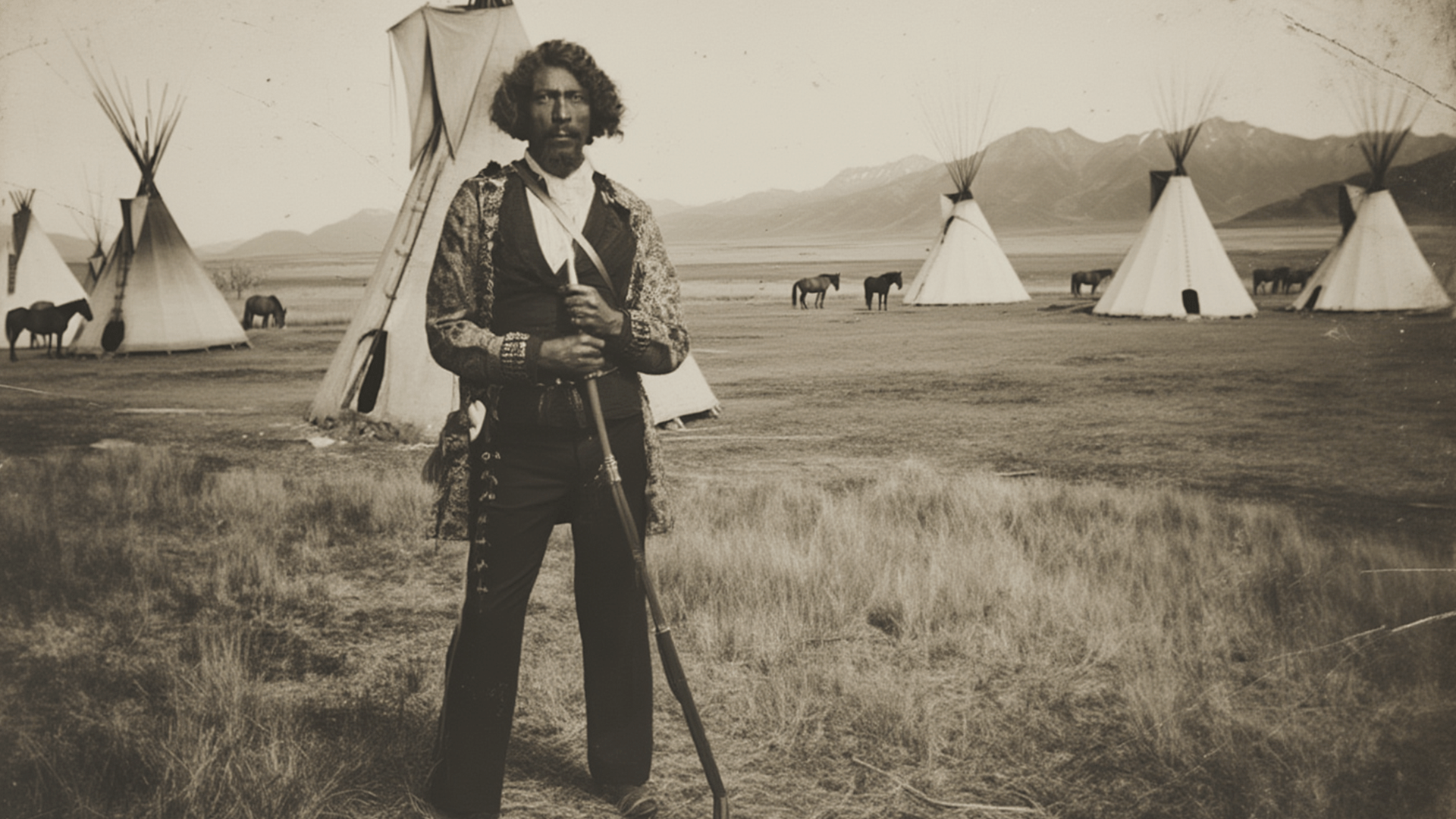
He turned to see a man he hadn’t laid eyes on in years, Nat Love, Deadwood Dick himself, older now, gray threading through his hair. His coat was dusted with trail dirt, his eyes sharp as ever.
“Nat,” Bill said, grinning. “Didn’t know you were in Oklahoma.”
“I go where the stories go,” Nat replied. “And you, bulldogger, you’re making the kind of stories that last.”
Bill laughed, the lines in his face deepening. “Then I better make it good.”
❦
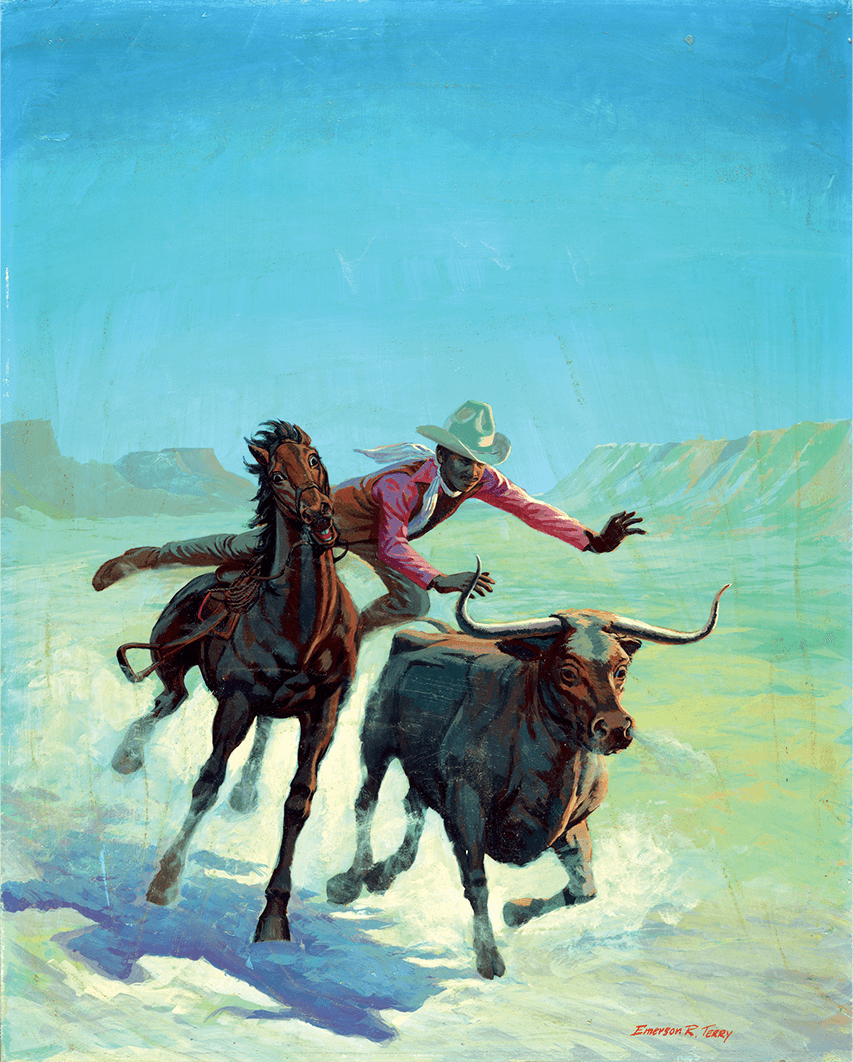
The chute gate flew open, and the steer burst forward, bawling and furious. Bill kicked Spradley into motion, hooves pounding, dust exploding beneath them. The crowd roared as he closed in. Then, in one fluid motion, Bill leapt from the saddle, his body twisting midair. His arms clamped around the steer’s horns, legs digging into the dirt.
He bit down on the animal’s upper lip, a trick he’d learned from watching bulldogs subdue bulls on the range. The steer thrashed, stumbled, and fell. In seconds, it lay subdued in the dust.
The stands erupted. Some spectators cheered; others gasped. A few looked bewildered, wondering if what they’d seen was even humanly possible.
Bill released the steer and stood tall, chest heaving, his skin slick with sweat and dust. Spradley circled back, snorting softly.
From the crowd, a booming voice rose above the chaos:
“That’s Bill Pickett, and don’t let nobody tell you different!”
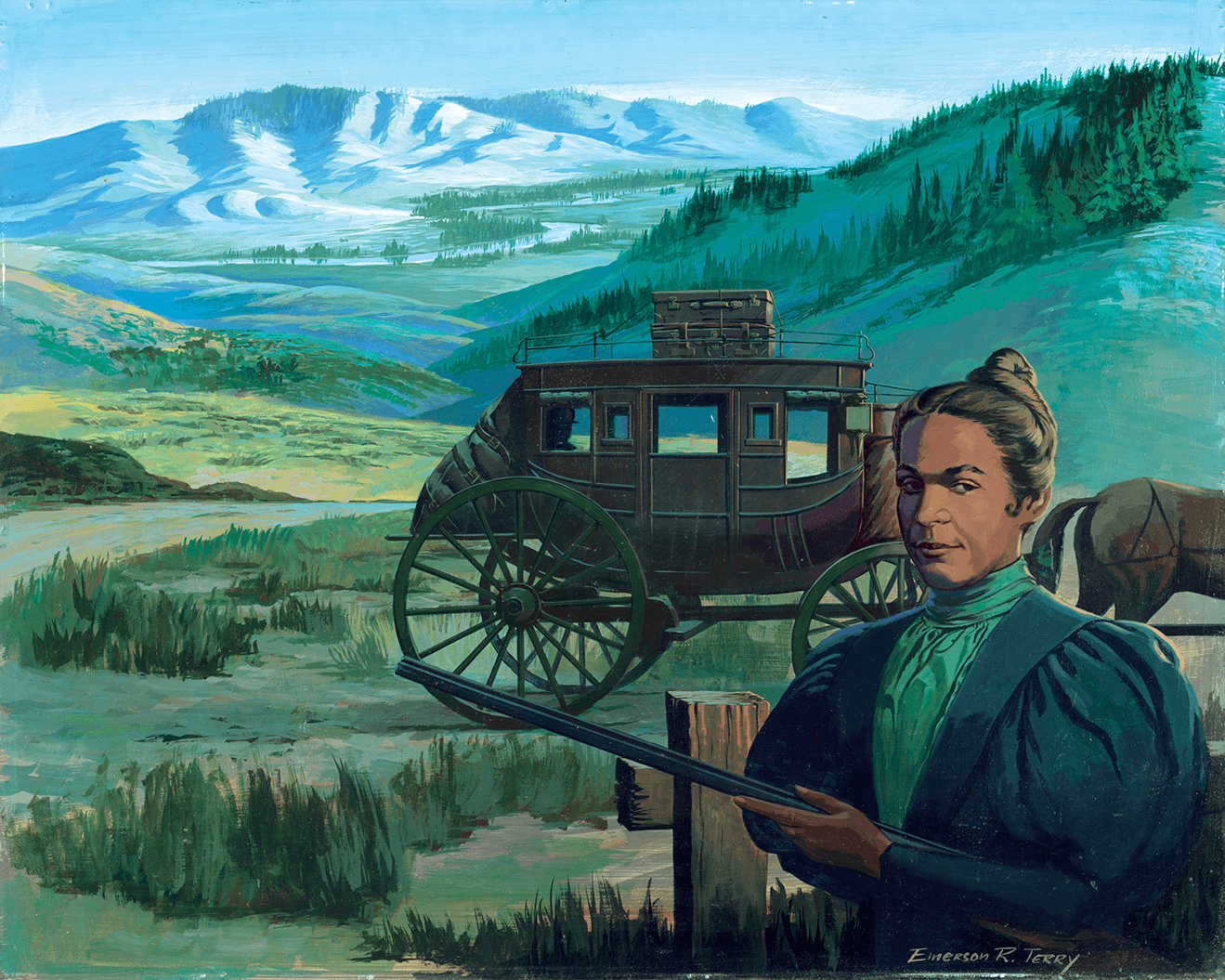
All heads turned. There, near the fence, stood Mary Fields, Stagecoach Mary, broad-shouldered, black-dressed, her hat cocked low. She had come all the way from Montana, escorting a small detachment of Buffalo Soldiers who respected her grit and her faith.
“Bill Pickett!” she shouted again. “The man who bites steers!”
The crowd laughed, applauded, shouted his real name for once. The Miller Brothers shifted in discomfort, but the truth had been hollered too loud to hide.
❦
That night, behind the arena, a small fire burned low. Nat Love leaned on his saddle, flask in hand. Mary sat with her boots off, rubbing her feet. A Buffalo Soldier veteran named Johnson tapped rhythm on a tin cup, the echo mingling with the crackle of the flames.
“You think they’ll ever give you your name proper?” Mary asked, glancing at Bill.
“They don’t have to,” Bill replied, poking the fire with a stick. “A man’s work speaks louder than what they print. The steer don’t care if I’m Black, Mexican, or Martian. He knows when he’s been thrown.”
Nat chuckled. “You got that right. They tried to call me Indian back in Deadwood, just so I could ride in their contests. Said a colored man couldn’t possibly out-rope a white one.”
Johnson lifted his tin cup. “Same way they sent us to Cuba to fight in ’98, then wouldn’t let us eat in the same mess tent when we came home.”
The fire snapped, sparks rising like stars. Bill gazed into the flames and thought of Bose Ikard, the legendary trail hand who had ridden with Charles Goodnight and Oliver Loving. Ikard’s grave bore the words Goodnight had carved himself: ‘Served me faithfully for four years on the Goodnight-Loving Trail… never shirked a duty.’
“Bose made it through,” Bill murmured. “We will too. Dust don’t last forever.”
❦
Months later, the 101 Ranch caravan rolled into Mexico. The air smelled of roasted maize and horses, mariachi music rising from the plaza. Crowds pressed against the rails of the Mexico City arena, hats waving, voices bright.
Bill rode out beneath the sun, hat pulled low, spurs glinting. Here, for once, the announcers didn’t disguise him.
“El negro vaquero!” someone shouted. “El hombre que doma toros con los dientes!”
The chant caught fire. Bill smiled, tipping his hat.
He performed with precision, his muscles moving in rhythm, the dance of danger he had perfected over the course of decades. When the steer finally crashed into the dust, the crowd stomped their boots, clapping in rhythm to the band.
Later, in the quiet of the stables, a young woman approached him. The daughter of a local rancher, her dress brushed with dust, her eyes shining.
“I have never seen such courage,” she said in Spanish.
Bill tipped his hat, answering carefully with the words he knew. “Es trabajo duro… pero bonito. Hard work, but beautiful.”
She smiled. “It is beautiful,” she said, touching the brim of his hat with a shy nod.
For a moment, Bill saw in her gaze what he had never found in America, recognition without disguise.
❦
Years passed, and the Wild West Show crossed the ocean. In England, the 101 Ranch set up near London’s Olympia Hall. The fog was thick, the air damp, but the banners still fluttered with painted riders and bulls.
Bill rode before crowds in bowler hats and lace gloves. He leapt, twisted, bit, and threw. The crowd gasped, then erupted into thunderous applause. Yet backstage, the announcer still introduced him as “the Mexican bulldogger.”
Mary, who had traveled with the troupe for a spell, spat at the dirt. “Fools,” she muttered. “They’ll take your brilliance and paint it any color but Black. Don’t you let them.”
Bill exhaled. “The bulldogging’s mine. My body knows it. My people know it. That’s enough.”
Nat, sitting nearby, grinned. “Let ’em dress it up however they want. History’s got a long memory. One day it’ll speak our names clear.”
They shared a silence heavy with understanding. In that moment, each carried the same unspoken vow to outlast the lie.
❦
The night before the troupe sailed back to America, Bill lay awake in his bunk, listening to rain tap against the canvas. He thought of the girl in Mexico, of Mary’s booming laughter, of Nat’s swagger and Johnson’s steady drumming hands. He thought of the old trails, the Brazos, the Chisholm, the Goodnight-Loving, where Black men had ridden side by side with Mexicans, Kiowa scouts, and poor whites trying to survive the Reconstruction years.
In his dreams, the past came alive in a rhythmic pattern. He heard the Yoruba songs his grandmother once hummed while cleaning, blending into the ring-shouts of the Southern fields. He thought of how his bulldogging, a man and beast locked in dusty communion, echoed ancient African wrestling traditions, where victory was as much a matter of spirit as strength.
When he woke, he whispered to himself, “Ain’t nothing new under this sun. We just bringin’ it home.”
❦
Back in Oklahoma, the prairie wind carried the same mix of pride and prejudice. The posters still called him “Comanche” or “Mexican,” but the ranch hands’ children knew better. They trailed after him in the corral, eager to see how he held the horns, how he shifted his weight, how he rode low and fast.
One evening, as the sun burned orange against the sky, Mary Fields joined him on the fence rail.
“You ever get tired of it, Bill?” she asked, voice low.
He shook his head. “No. Bulldogging ain’t just for the crowd. It’s a way of showing what we can do. It’s my mark.”
Mary smiled, her face lined like old leather. “Then make sure the world don’t forget whose mark it is.”
Bill tipped his hat. “They won’t. Not if we keep tellin’ it.”
❦
The next afternoon, the steer came out of the chute like a storm. Bill’s muscles remembered before his mind did. He leapt, twisted, and bit down. The beast crashed to the earth, dust blooming like smoke.
For an instant, time stopped.
In the silence between heartbeats, he heard Bose Ikard’s steady voice, like wind across the plains: Ride long, boy. Ride true. They can’t take from you what you already own.
Bill stood tall, framed against the sky, a Black cowboy claiming the earth beneath his boots.
❦
The line went quiet. Emerson Terry held the receiver for a moment longer, then set it gently in its cradle.
In the stillness of his studio, the Pickett painting was miles away, hanging in the museum under its steady light, but its presence still filled the room. Before him now stood a
different canvas, half-finished: a man in colonial garb, on the move forward, in front of all the others, confronting, resisting. Four British soldiers, armed and aggressive, are detailed below him. Yet they are smaller and appear to be suppressed out outmaneuvered into a corner by Attucks and the men who fight with him. Emerson dipped his brush and drew a sure, dark curve along the man’s jaw.
Crispus Attucks.
The first to fall in the Boston Massacre, March 5, 1770, was a free Black sailor, an escaped slave who had run from bondage in 1750, and the first to die in America’s revolution for liberty.
Emerson stepped back. The acrylic surface glowed under the lamplight, colors clean and silent. Two centuries apart, Pickett and Attucks stood in his imagination like sentinels at opposite gates of the same long road, one opening with a musket’s fire, the other closing with a cowboy’s dust.
Outside, Los Angeles lights shimmered like distant campfires. Emerson rinsed his brush and whispered, almost to himself,
“From the first shot to the last ride… we’ve always been here.”
He laid the brush down, the quiet of the room settling around him like canvas cloth, and knew his calling was not to finish history but to
keep painting its continuance.
End Notes
1. William Loren Katz, The Black West (New York: Anchor, 1971).
2. Michael Searles, “Cowboys of Color: The Forgotten Men of the American West,” Journal of the West 25, no. 1 (1986): 49–58.
3. Kenneth Wiggins Porter, The Negro on the American Frontier (Iowa State University Press, 1971).
4. Arthur Tolson, “Bill Pickett, the Dusky Demon,” Oklahoma Historical Society Chronicles, Vol. 24 (1946).
5. Chicago Defender, Feb 1910, “Negro Cowboy Thrills the West.”
6. Herb Jeffries, I’m a Happy Cowboy (recording, 1940).
7. James Nottage, Frontier America and the Wild West Show, Buffalo Bill Center of the West Archives (Cody, WY).
8. National Cowboy Hall of Fame, “Bill Pickett Inductee Record,” 1971.
9. Quintard Taylor, In Search of the Racial Frontier (W. W. Norton, 1998).
10. Henry Louis Gates Jr., The Signifying Monkey (Oxford University Press, 1988).
More Chapters

Choose your Trail